
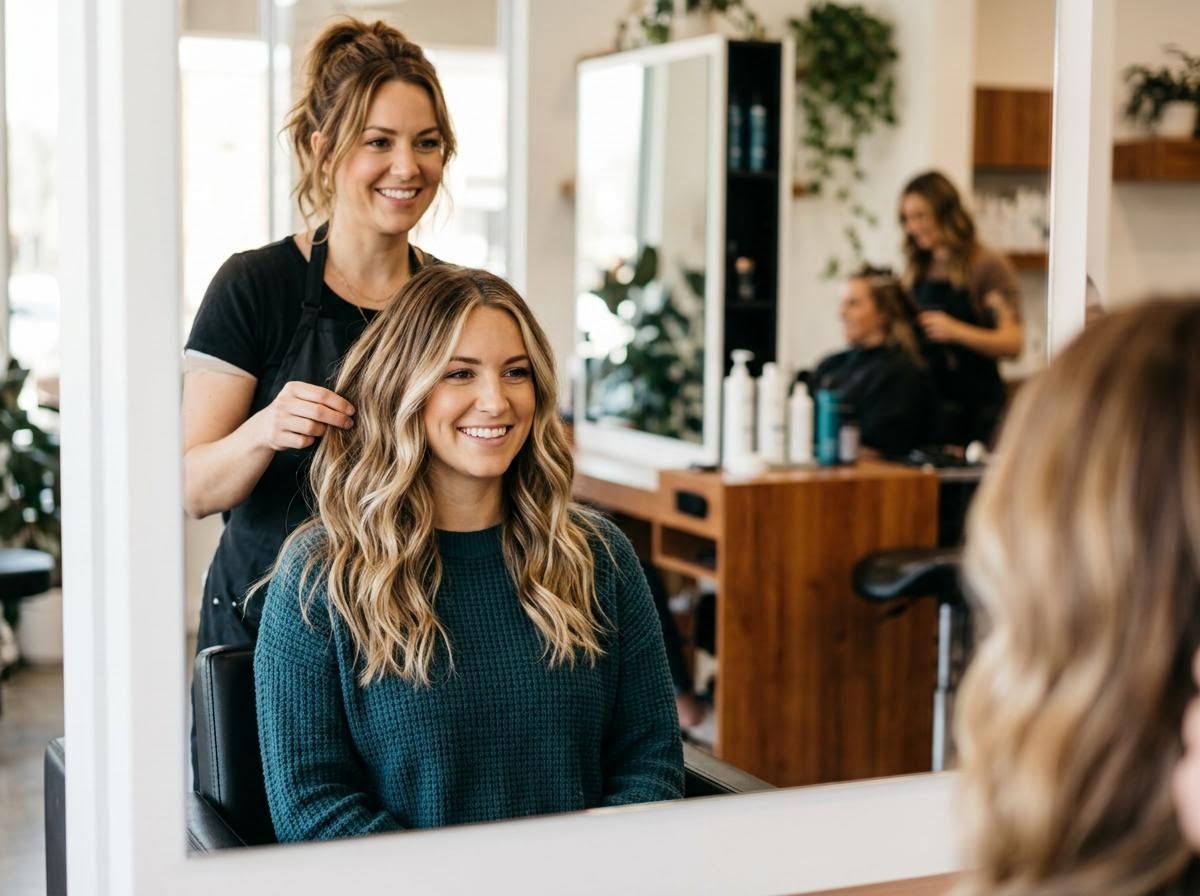
If you have ever asked, " What is the difference between balayage and highlights?", you are not alone. Many salon guests use the terms interchangeably, but they are not the same service. At BT on the BLVD, color is customized based on your natural hair color, haircut, maintenance goals, and lifestyle. That matters even more in places like Sarasota, Lakewood Ranch, and Manatee, where sun, heat, and humidity can affect how your color looks and how your hair feels between appointments. BT on the BLVD offers custom color services, precision cutting, and professional products chosen to support long-term hair health.
The simple answer is this: Balayage is a hand-painted lightening technique that creates a softer, more blended result, while traditional highlights usually rely on foils to create brighter, more structured pieces from root to end. Both can look beautiful. The right choice depends on the finish you want, how often you want to come back for maintenance, and how much contrast you want to see in your hair.
What Is a Balayage Hairstyle?
If you have been wondering what a balayage hairstyle is, think of a soft, painted dimension. The word balayage comes from the French word for “to sweep,” which reflects the way lightener is painted onto the hair by hand. Instead of placing every section into foil, the stylist applies color in a more freehand way to create a gradual, sunlit effect. The result is usually softer at the root and brighter through the mid-lengths and ends.
Balayage is often chosen by people who want color that looks natural as it grows out. Because the lightness is blended instead of starting in a hard line near the scalp, the regrowth tends to look softer over time. That does not mean balayage is “no maintenance,” but it often feels more forgiving than a traditional foil highlight service.
What Are Highlights?
Highlights usually involve sectioning the hair and isolating selected strands in foil. This gives the stylist more control over lift, placement, and brightness. If you want a cleaner pattern, lighter pieces closer to the root, or a more noticeable blonde result, highlights may be the better fit. Foils can also be useful when a guest wants cooler blondes or stronger lift, because the enclosed section helps processing stay more controlled.
Traditional highlights can be subtle or bold. They are not automatically “chunky” or dated. In fact, modern highlights can be very refined when the placement is customized to your haircut, hair density, and desired finish. If someone wants brightness around the face, more overall lightness, or a polished blonde look from root to end, highlights often make that easier to achieve.
What Is the Difference Between Foils and Balayage?
One of the most common follow-up questions is what is the difference between foils and balayage? The biggest difference is the application method. Balayage is usually painted by hand for a softer transition. Foils separate the hair into sections for a more even and often brighter result. In practical terms, balayage usually looks more diffused, while highlights often look more defined.
The second major difference is maintenance. Balayage often grows out more softly because the root area is less defined. Highlights can require more regular touch-ups if the lightness starts closer to the scalp. That does not mean one is better than the other. It simply means one may fit your schedule better. Someone who likes salon visits every couple of months may love highlights. Someone who wants more time between appointments may lean toward balayage.
The third difference is brightness. If your goal is maximum lift, strong contrast, or a brighter blonde overall, highlights often give your stylist more control. If your goal is movement, softness, and a lived-in look, balayage may be the better choice. Many modern color services also combine the two techniques, using foils in some areas and hand painting in others for a customized finish.
Balayage vs Highlights: Which Look Is Better for Your Hair Goals?
Balayage is often a strong fit if you want a softer dimension, a lower-maintenance grow-out, or a result that looks naturally sunlit. It is popular for brunettes who want caramel ribbons, blondes who want a beachy finish, and guests who do not want a strong line of regrowth. It can also work well on longer hair because there is more space to show the gradual shift from deeper roots to lighter ends.
Highlights may be better if you want a brighter blonde, more even lightness throughout the head, or clear brightness near the scalp. They can also be useful for shorter cuts, more structured looks, and guests who prefer a polished finish over a softer one. If you bring in photos of cooler blondes, crisp ribbons, or strong brightness through the crown, foil work may be part of the plan.
What is the Difference Between Ombre and Balayage?
Another point of confusion is what the difference is between ombre and balayage. These are not the same thing. Balayage is an application technique. Ombre is a finished look. Ombre usually describes a more obvious gradient from darker roots to lighter ends. Balayage can be used to create an ombre-like effect, but it can also be used for a much softer dimension that does not look like a dramatic fade from dark to light.
That distinction matters during a consultation. A guest may ask for balayage when they are really describing a soft highlight, or ask for highlights when they are really after a lived-in balayage. Good consultation photos help, but clear language also helps. The real goal is not choosing the trendiest term. It is choosing the technique that creates the result you actually want.
What About Hair Health?
Any lightening service, whether it is balayage or highlights, can affect the condition of the hair because bleach and similar lighteners change the hair structure. Dermatologists note that coloring and perming can leave hair dry and brittle, and a 2024 study on excessive bleaching found measurable structural damage compared with untreated hair. That does not mean you should avoid color altogether. It means technique, timing, and aftercare matter.
This is one reason custom color matters. The best result is not just about getting lighter. It is about deciding how much lift your hair can comfortably handle, how often it should be refreshed, and what home care products will help protect it. That is especially important in Florida, where heat, UV exposure, and humidity can make already processed hair feel drier or frizzier between visits.
How to Take Care of Colored Hair in Sarasota
If you are investing in balayage or highlights, home care plays a major role in how long your color stays fresh. Dermatologists recommend habits that reduce dryness and breakage, including gentler hair care and avoiding practices that add unnecessary damage. For color-treated hair, that usually means using salon-recommended products, being careful with heat, and keeping the hair hydrated.
For Sarasota clients, how to protect hair from humidity is part of color maintenance, too. Humidity can make frizz more visible, especially when the hair has been lightened. A smart routine may include moisturizing products, heat protection, and finishing products that help smooth the cuticle without making the hair heavy. BT on the BLVD also offers professional product options selected to support styling and long-term hair care at home.
If you want to keep your color looking polished, ask your stylist not only which service to book, but also how to take care of colored hair after the appointment. The right shampoo, conditioner, mask, and styling products can make a visible difference in shine, softness, and color longevity.
So, Which One Should You Choose?
Choose balayage if you want a softer, more blended look with gentler grow-out. Choose highlights if you want brighter, more structured lightness and a more defined result. If you want something in between, ask for a customized approach. Many of the best modern color results are not strictly one or the other. They are built around your hair, your routine, and your end goal.
A good consultation should cover your natural base color, previous color history, haircut, styling habits, and maintenance schedule. It should also cover texture and condition, because the right technique on paper is not always the right one for the current health of your hair. When that part is done well, the final result tends to look better and hold up better.
Conclusion
If you have been asking what the difference is between balayage and highlights, the answer comes down to technique, finish, upkeep, and your personal hair goals. Balayage gives a softer, hand-painted look. Highlights usually give brighter, more structured lightness. Neither is automatically better. The best choice is the one that fits your hair and your routine.
If you are ready to talk through your options, explore BT on the Blvd, browse services at BT on the Blvd Hair salon, or shop recommended home care through Luxury hair salon in Sarasota. To book a consultation or learn more, visit www.btontheblvd.com.